
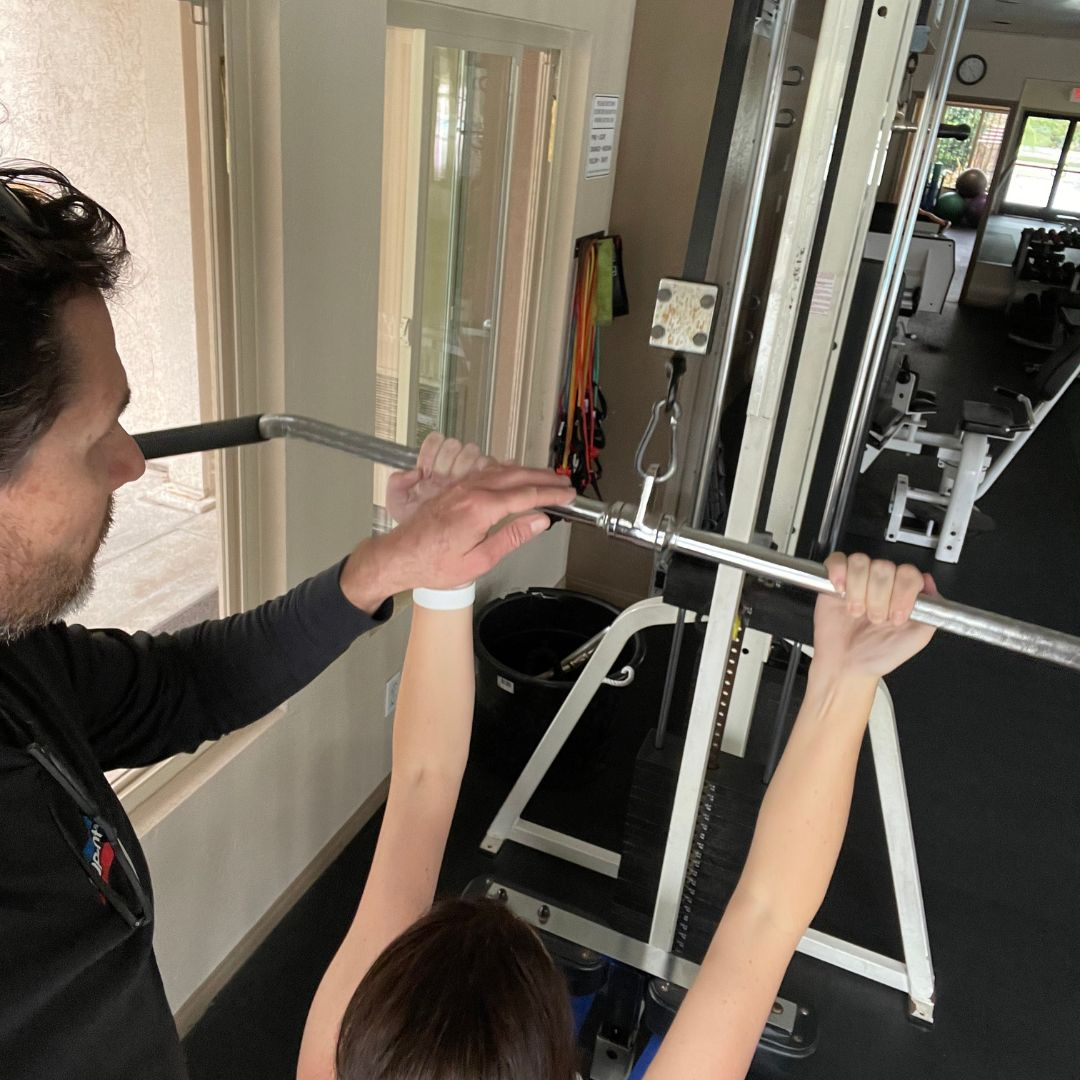
Yes, you can build muscle after 40, but your muscles need a stronger signal than they did at 25. In practice, that means enough protein at every meal, sets taken close to failure, and consistent training two to three times per week. This is the approach Fabien uses with in-home clients across La Jolla, Del Mar and Solana Beach.
If gaining muscle, or even keeping it, feels harder than it used to, you are not imagining it. The good news is that muscle responds to training at every age. It simply needs a clearer message.
What actually tells a muscle to grow?
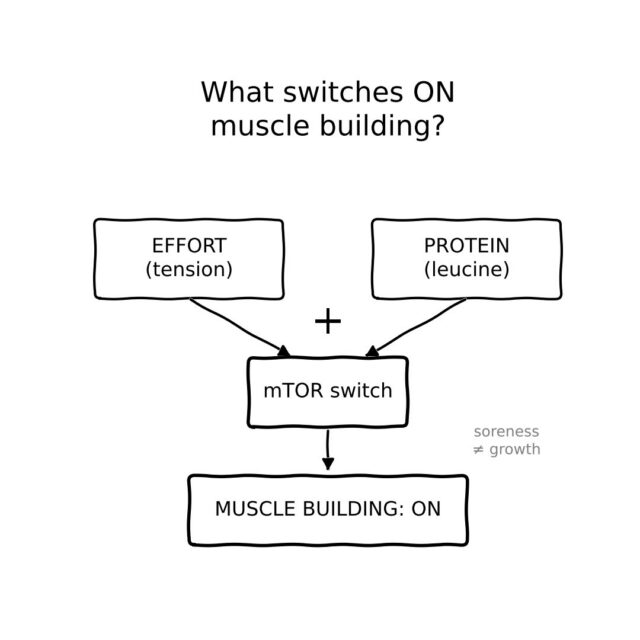
Muscle grows when effort and nutrition arrive together. Inside every muscle cell, a switch called mTOR acts like a site foreman. It only starts construction when two conditions are met: a reason to build, and the materials to build with.
The reason to build is mechanical tension, the effort your muscles produce against resistance. This is the number one driver of muscle growth. The materials come from protein, especially an amino acid called leucine, found in eggs, dairy, fish, meat and whey. Insulin, released when you eat, plays a supporting role.
Soreness, by the way, is not part of this signal. Feeling sore the next day does not mean a workout was effective, and not feeling sore does not mean it failed.
Why is it harder to build muscle after 40?
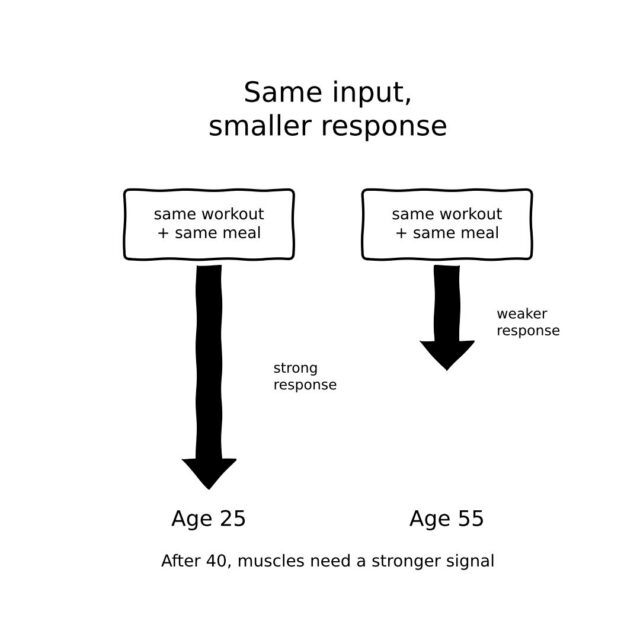
With age, that cellular switch becomes less sensitive. Researchers call this anabolic resistance. The same workout or the same meal that built muscle at 25 produces a smaller response at 55.
For women, the drop in estrogen around menopause adds to this effect. Inactivity makes it worse too. Even a few days of reduced activity can dull the way muscles respond.
This matters far beyond appearance. Muscle supports your metabolism, your balance, your bones and your independence. Learning how to build muscle after 40 is really about protecting the next forty years. https://www.nia.nih.gov/news/how-can-strength-training-build-healthier-bodies-we-age
How much protein do you need after 40?
For women over 40, especially as estrogen declines, we use a simple daily target: about 1 gram of protein per pound of goal body weight. A woman aiming for 140 pounds (63kg) would eat around 63 grams of protein per day.
This sits at the higher end of what research supports, and that is intentional. As estrogen drops around menopause, muscles become less responsive to protein, so a generous target helps compensate.
How you spread that protein matters as much as the total. Many people eat very little at breakfast and lunch, then most of it at dinner. Aim instead for three or four meals with 16 to 21 grams each. That amount provides enough leucine to switch on muscle building at every meal.
Some studies suggest omega-3 fatty acids may improve how older muscles respond to protein and exercise. If you have kidney concerns or any medical condition, talk with your doctor before raising your protein intake or adding supplements. https://lajollapersonaltraining.com/2026/08/26/weight-loss-after-40/
How should you train to build muscle after 40?
Since your muscles need a stronger signal, the effort of each set matters more than the weight on the bar. The last few hard repetitions of a set are the ones that drive growth.
Lighter loads work too. Research shows that moderate or even light weights can build muscle about as well as heavy ones, as long as you take the set close to failure. That is excellent news for your joints.
Consistency keeps the signal strong. Training each muscle group two to three times per week, and staying active between sessions, is the most reliable way to build muscle after 40.
What are myo-reps, and why do they work so well after 40?
Myo-reps are a rest-pause method we use often with clients over 40. The name comes from the Greek word for muscle.
You start with an activation set. Choose a light to moderate weight you could lift 15 to 20 times, and stop one or two reps short of failure. Then rest for only 15 to 20 seconds, about three to five deep breaths.
Next, perform a mini-set of three to five reps with the same weight, followed by another short rest. Repeat for up to five mini-sets, and stop as soon as you can no longer reach your target number of reps.
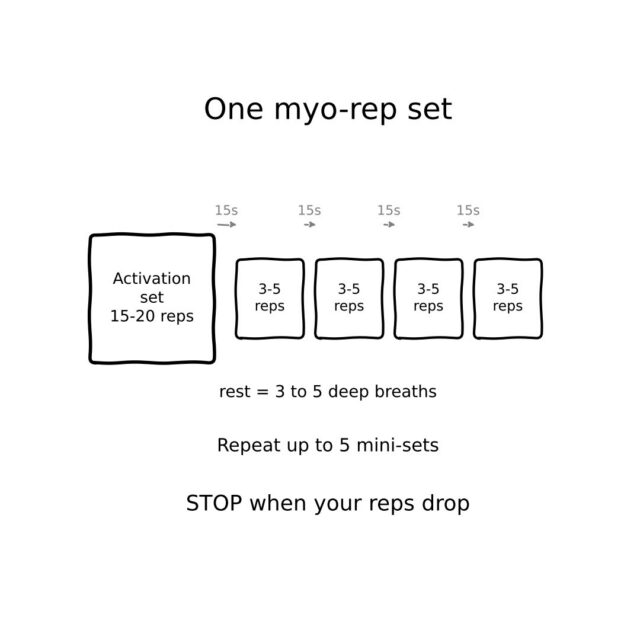
The idea behind the method is that fatigue from the first set forces your body to recruit more muscle fibers, so the mini-sets deliver a strong growth signal with light weights in very little time. The research on this mechanism is still developing, but the practical results make it a valuable tool.
Myo-reps work best on stable movements that involve a single joint, such as dumbbell lateral raises, band rows, biceps curls or banded leg extensions. They are not a good fit for heavy squats or deadlifts, where fatigue can break down your technique.
Why work with a coach instead of training alone?
Training on your own can absolutely work, and many people make real progress that way. The hard part is judging how close you are to failure. Most people stop several reps too early, or keep going after their form has started to slip.
A coach watches every rep from the outside and adjusts the plan week after week. Our method follows three phases: Assess, Rebuild, Retrain. We start by understanding how your body moves today. Then we prepare your joints to handle load through targeted mobility work. Only after that do we build strength on that foundation. https://lajollapersonaltraining.com/2026/07/15/personal-trainer-over-40-la-jolla/
Where can you find in-home strength coaching in La Jolla?
La Jolla Personal Training is a concierge in-home coaching service for adults over 40 in La Jolla, Del Mar and Solana Beach. Every session takes place in your home, with equipment adapted to your space and a program built around your body and your goals.
Frequently asked questions:
Is it too late to build muscle after 50 or 60?
No. Muscle responds to training at any age. The response is smaller than at 25, which is why protein intake and training effort matter more as the years go by.
Do women need more protein after menopause?
Yes, in most cases. As estrogen declines, muscles respond less to protein, so a higher daily intake helps. A practical target is about 1 gram per pound of goal body weight, spread across three or four meals.
Do I need to lift heavy weights to build muscle?
Not necessarily. Moderate and even light weights can build muscle when sets are taken close to failure. Heavy lifting has its place, but it is not the only path.
Does muscle soreness mean my workout worked?
No. Soreness is a possible side effect of training, not a sign of growth. Progress shows up over weeks in strength and in how your body performs.
Can I build muscle at home without a gym?
Yes. Dumbbells, resistance bands and your own body weight are enough to create a strong growth signal, especially with methods like myo-reps.
This article is for educational purposes only and does not constitute medical advice. Consult your healthcare provider before starting a new exercise or nutrition program.