
Weight Loss After 40
Somewhere in your forties, the formula that used to work quietly stops working. The scale barely moves even though nothing else has changed. Weight loss after 40 starts to feel like a different game than it used to be.
The good news is that nothing is broken. Your body after 40 responds to a slightly different set of levers than it did at 25. Once you know what they are, the picture gets a lot simpler.
This article covers four pieces of that puzzle: your muscle, your cardio, and your plate. It also covers the everyday movement that quietly matters more than people expect.
The Piece Cardio Cannot Do On Its Own
Cardio is genuinely useful for your heart and your energy levels. It also helps create the calorie deficit that weight loss depends on.
What it does not do particularly well on its own is protect the muscle you already have. Muscle loss tends to creep in gradually from midlife onward if nothing actively counteracts it.
Muscle is your body’s most metabolically active tissue, meaning it burns energy even while you are resting. Lose it, and you lose part of the engine that keeps your metabolism running all day, cardio sessions included.
Structured strength training reverses that drift, ref: https://www.nia.nih.gov/news/how-can-strength-training-build-healthier-bodies-we-age. It signals your body to hold onto and build muscle, even while you are in a calorie deficit. That means the weight you lose is more likely to be fat, not the muscle you need to protect your metabolism and your strength.
Not All Cardio Does the Same Job
Cardio is not one thing. Two very different paces train two very different systems, and after 40 you benefit from both. That is part of why weight loss after 40 rarely responds to more of the same cardio you have always done.
Easy, steady-paced cardio, often called zone two, is a brisk walk or a light ride where you could still hold a conversation. This pace slowly increases the number of tiny energy-producing structures inside your cells, almost like small power plants. More of them, working well, means your body gets better at burning fat for fuel and has more energy for everyday life.
Short, hard efforts, sometimes called zone five, play a different role. They push your body to clear out the power plants that are old or worn. They also help you get sharper at handling intensity, so a set of stairs or a hard moment in the gym doesn’t catch you off guard.
Skipping zone five and only doing easy cardio leaves that capacity untrained. A well-built program uses both, in proportions that fit where you are starting from.
How You Eat Matters As Much As How You Move
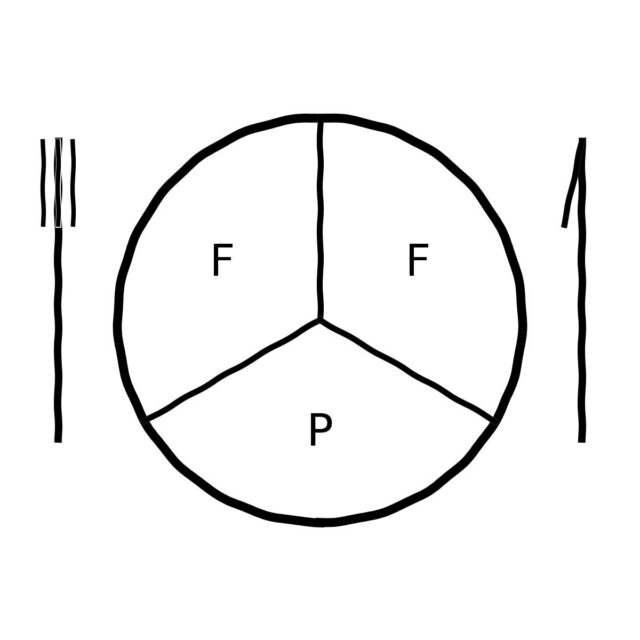
A simple way to build a plate, without counting calories, is to start with Fiber, Protein, and Fat. Skip centering it on refined starches like white bread, pasta, or a big bowl of plain rice. This one habit alone tends to move the needle on weight loss after 40 more than any single workout does.
Save the starchy carbohydrates for last. Only reach for more of them if you are still hungry once the rest of the plate is gone. One thing is almost guaranteed when you eat in this order: you end up eating noticeably less of them.
A practical swap is to choose a potato with the skin on instead of white rice. It is the same comforting, starchy element on the plate. It just has noticeably more fiber, which slows digestion and keeps you satisfied longer.
A potato also takes up more room on the plate and in your stomach for a similar number of calories. That means the feeling of being full arrives more easily than it does with a smaller, denser portion of rice.
A short ten-minute walk after a meal helps your body process it as well.
The Movement You Do Not Track Still Counts
There is a term for all the energy you burn outside of structured workouts. Think taking the stairs, standing while on the phone, or walking instead of texting someone in the next room. Researchers call this NEAT. Added up across a full day, it can influence your total energy burn more than people assume.
It is also often the first thing that quietly disappears as life gets busier, without anyone noticing.
Making Weight Loss After 40 Feel Manageable
Muscle, cardio, your plate, and your daily movement: together, that can feel like a lot to track at once.
That reaction is normal, and it is exactly what a coach is for. A good program introduces these pieces in the right order, at a pace that fits your actual life. What feels overwhelming as a list becomes manageable as a plan when someone experienced builds it around you.
This is exactly the approach behind private personal training in La Jolla, Del Mar, and Solana Beach. A coach builds your program around your body, your schedule, and where you are actually starting from, instead of handing you a generic plan to figure out on your own.
If weight loss after 40 feels more complicated than it used to, that is usually the moment it helps most. A second set of eyes, brought directly to your home, makes the difference. https://lajollapersonaltraining.com/free-assessment/
The Science Behind This Article
The link between cardiovascular training intensity and mitochondrial health is well documented. Steady, low-intensity effort builds mitochondrial density, while high-intensity effort supports mitochondrial renewal and metabolic flexibility. This section draws on research synthesized in Vincent Foulonneau’s work on mitochondria and aging.
The role of resistance training in preserving muscle mass during a calorie deficit is well established in exercise physiology and sarcopenia research. The same is true for muscle’s role as metabolically active tissue.
The concept of NEAT, non-exercise activity thermogenesis, comes from research popularized by physiologist James Levine. It describes how everyday movement contributes to total daily energy expenditure.
The effect of meal composition, particularly fiber, protein, and fat, on blood sugar stability is supported by established nutritional science.